The IEP Meeting Checklist (Free Printable)
What is the IEP Meeting Checklist?
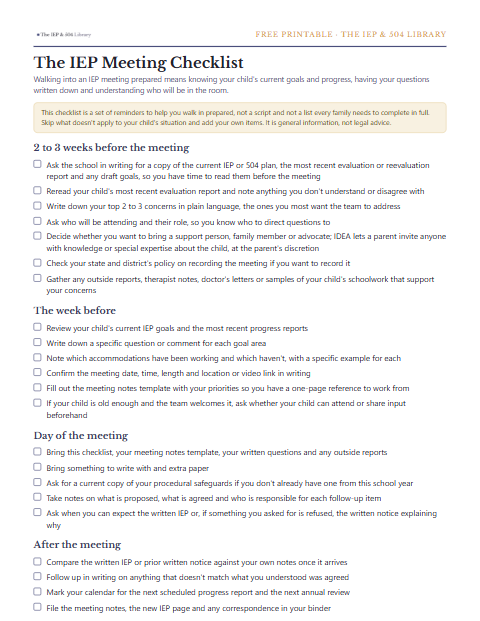
Walking into an IEP meeting prepared means knowing your child's current goals and progress, having your questions written down and understanding who will be in the room. This checklist breaks the prep work into four stages, from a few weeks out through the follow-up after the meeting, so nothing gets missed in the rush of a busy week.
How to use it
Print this checklist and work through it a section at a time in the days before the meeting. Check off what you complete and jot notes in the margins. Bring the checklist itself to the meeting along with the meeting notes template so you have one place to track what gets said.
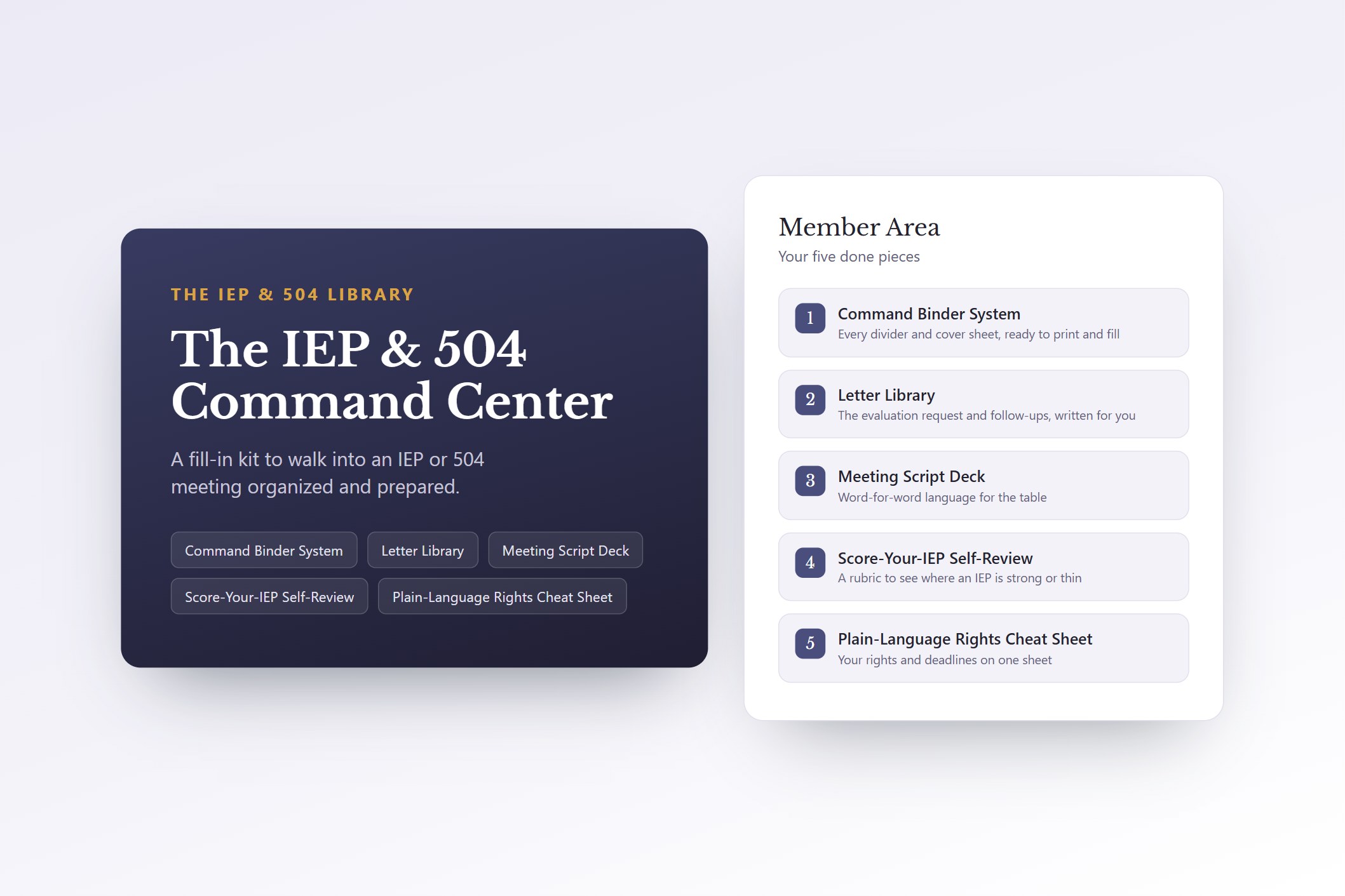
What is on the printable
2 to 3 weeks before the meeting
- Ask the school in writing for a copy of the current IEP or 504 plan, the most recent evaluation or reevaluation report and any draft goals, so you have time to read them before the meeting
- Reread your child's most recent evaluation report and note anything you don't understand or disagree with
- Write down your top 2 to 3 concerns in plain language, the ones you most want the team to address
- Ask who will be attending and their role, so you know who to direct questions to
- Decide whether you want to bring a support person, family member or advocate; IDEA lets a parent invite anyone with knowledge or special expertise about the child, at the parent's discretion
- Check your state and district's policy on recording the meeting if you want to record it
- Gather any outside reports, therapist notes, doctor's letters or samples of your child's schoolwork that support your concerns
The week before
- Review your child's current IEP goals and the most recent progress reports
- Write down a specific question or comment for each goal area
- Note which accommodations have been working and which haven't, with a specific example for each
- Confirm the meeting date, time, length and location or video link in writing
- Fill out the meeting notes template with your priorities so you have a one-page reference to work from
- If your child is old enough and the team welcomes it, ask whether your child can attend or share input beforehand
Day of the meeting
- Bring this checklist, your meeting notes template, your written questions and any outside reports
- Bring something to write with and extra paper
- Ask for a current copy of your procedural safeguards if you don't already have one from this school year
- Take notes on what is proposed, what is agreed and who is responsible for each follow-up item
- Ask when you can expect the written IEP or, if something you asked for is refused, the written notice explaining why
After the meeting
- Compare the written IEP or prior written notice against your own notes once it arrives
- Follow up in writing on anything that doesn't match what you understood was agreed
- Mark your calendar for the next scheduled progress report and the next annual review
- File the meeting notes, the new IEP page and any correspondence in your binder
What to bring
- This checklist and the meeting notes template
- Your written list of concerns and questions
- The current IEP or 504 plan and the most recent evaluation report
- Any outside evaluations, therapist notes or work samples
- A pen and extra paper
Get the free IEP Meeting Checklist (PDF)
The four-stage prep checklist, from a few weeks out through the follow-up, so nothing gets missed in a busy week.
We email you the PDF, plus a note if the guidance on this topic changes. Unsubscribe anytime.